
Cleaning Products You Should Never Mix (Safety Guide)

We all want a home that is sparkling clean and germ-free. However, in the pursuit of a deeper clean, many people make the dangerous mistake of mixing different household cleaners. While it might seem like a "super cleaner" in theory, combining certain chemicals can create toxic fumes, corrosive acids, or even explosive reactions.
Safety should always be the most important part of your routine. Here is your essential guide to the cleaning combinations you must never mix.
1. Bleach + Ammonia = Toxic Chloramine Vapor
This is one of the most dangerous—and common—combinations. When mixed, these two produce chloramine gas, which can cause shortness of breath, chest pain, and even pneumonia.
Where it happens: Mixing bleach with certain glass cleaners, floor cleaners, or even urine (be careful when cleaning around a toilet or a pet's litter box).
2. Bleach + Vinegar = Chlorine Gas
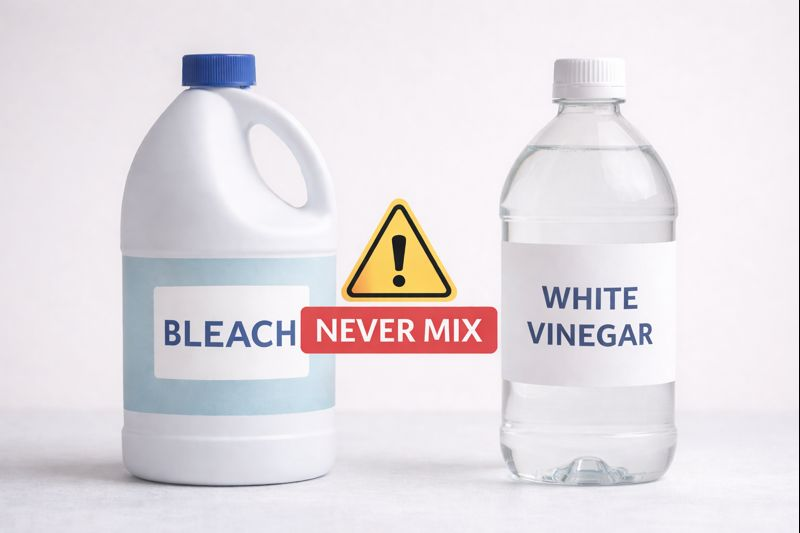
Vinegar is a staple for natural cleaning, but it is an acid. Bleach is a strong base. Combining them creates chlorine gas. Even at low levels, this gas can cause severe coughing, breathing problems, and stinging, watery eyes.
The Risk: Permanent damage to your airways or chemical burns to your eyes.
3. Bleach + Rubbing Alcohol = Chloroform
You might recognize this name from old movies, but the reality is no joke. Mixing bleach and rubbing alcohol (isopropyl or ethanol) creates chloroform. Inhaling it can knock you unconscious and lead to serious damage to your central nervous system, liver, and kidneys.
4. Vinegar + Hydrogen Peroxide = Peracetic Acid

While these are two of the most popular "natural" cleaners, they should never live in the same bottle. Mixing them creates peracetic acid, a highly corrosive substance that can irritate your skin, eyes, and respiratory system.
Safety Tip: It is generally safe to use them consecutively (e.g., spraying vinegar, wiping it away, then spraying peroxide), but never mix them together in a single container.
5. Drain Cleaner + Drain Cleaner
If one drain cleaner doesn't clear the clog, do not pour a different brand or type down the same pipe. Drain cleaners use incredibly powerful chemicals (like sulfuric acid or sodium hydroxide). Mixing two different formulas can cause an explosive reaction that shoots toxic liquid back up the drain or even melts your pipes.
Safety Best Practices to Remember
Read the Label: Manufacturers always list "Do Not Use With" warnings for a reason.
Keep it Simple: One product, one task. Most modern cleaners are designed to work perfectly on their own.
Ventilate: Always keep a window open or a fan running when using strong chemicals.
Store Separately: Keep bleach-based products and acid-based products on different shelves to prevent accidental leaks from mixing.
Pro Tip: If you accidentally mix chemicals and smell a sharp odor or feel dizzy, leave the area immediately, get fresh air, and call emergency services or poison control.

Leave the Deep Cleaning to the Pros
At the end of the day, keeping a home clean shouldn't come at the cost of your health or safety. By sticking to one product at a time or opting for natural alternatives, you can keep your space fresh without the chemical risks. If you ever feel overwhelmed by tough stains or heavy-duty grime, don't risk a DIY chemistry experiment—let a professional handle it instead. Our team at Sparkling Homes is trained in the latest safety protocols and effective cleaning techniques to give your home a deep, safe, and healthy shine every time.
Ready for a spotless home without the stress?


Comments